

As artificial intelligence and connected systems shape more of our daily life, one question sits at the center of modern technology: trust.
Who do we trust?
How do we detect deception?
And how can we design systems that behave responsibly toward the people who rely on them?
Our October Albanians in IT (AiT) virtual meetup brought together two experts — Adri Loloci and Helga Mustafaraj — to explore the intersection of human and machine intelligence and the future of digital trust.
Speakers
🔴 Adri Loloci
Senior Product Manager, Vodafone UK
Adri walked us through how real-time network intelligence and machine learning are transforming fraud detection. His product, Scam Signal, integrates telco-level data with financial institutions to stop scams before they happen.
Today, major UK banks are blocking 25% more social-engineering fraud thanks to this system — showing how telecom networks can play a direct role in protecting millions.
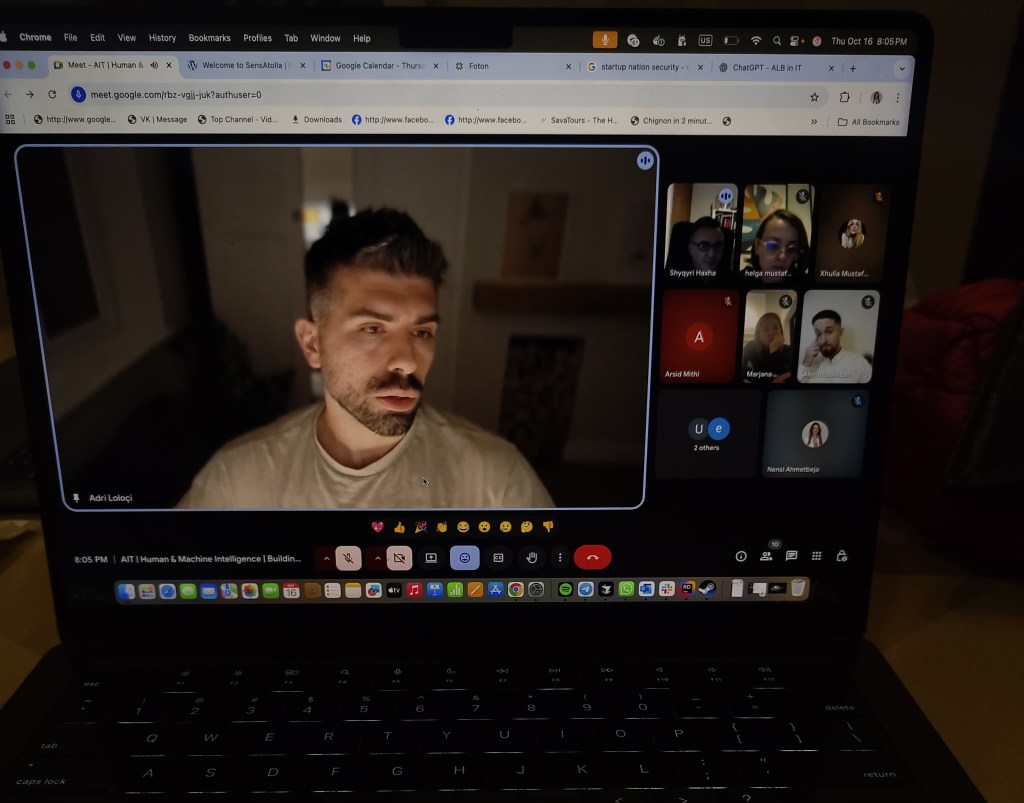
The talk was highly confidential so, next time, don’t miss joining us live 🙂
🟣 Helga Mustafaraj
Chevening Western Balkans Cyber Security Fellow
Researcher at Cranfield University, Defence Academy of the UK
Senior PM at Innovation Hub Tirana
Helga explored the human side of security: how culture, behaviour, and design principles shape the strength — or vulnerability — of digital systems. Her work examines how societies define responsibility, and how human-centric approaches can drive better protection, better policy, and ultimately better trust.
During the session, Helga Mustafaraj also shared early findings from her ongoing research at Cranfield University, Defence Academy of the UK, which examines how organisations perceive and manage cybersecurity risk.
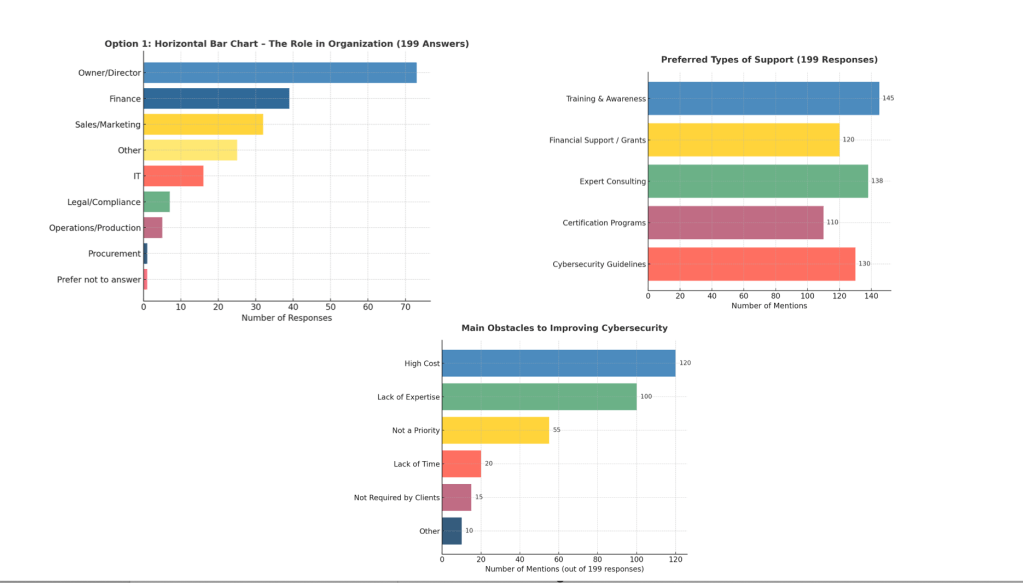
Her survey (199 respondents across multiple sectors) uncovers several important patterns:
1. Who Shapes Cybersecurity Decisions?
Most respondents identifying as:
- Owners/Directors (highest group)
- Finance roles
- Sales/Marketing
This highlights that cybersecurity decisions are often influenced by non-technical leadership, making human factors and communication essential.
2. What Support Do Organisations Need Most?
Top requests included:
- Training & awareness (145 mentions)
- Expert consulting (138 mentions)
- Cybersecurity guidelines (130 mentions)
- Financial support/grants (120 mentions)
This shows a strong demand for capacity building, not just tools.
3. What Are the Main Obstacles?
Respondents reported:
- High cost (120 mentions)
- Lack of expertise (100 mentions)
- Low priority (55 mentions)
- Lack of time (20 mentions)
These barriers reinforce Helga’s key point during the talk: effective cybersecurity is not only about technology:
it’s shaped by people, culture, and organisational priorities.

About Albanians in IT (AIT)
Albanians in IT is a global network of senior Albanian professionals in software engineering, product development, cybersecurity, data, AI, and technical leadership.
We connect diaspora experts, founders, and decision-makers to share knowledge, support each other, and build meaningful cross-border collaborations.
Membership is exclusive to professionals with 5+ years of experience who are committed to contributing to the Albanian tech ecosystem.
Learn more: https://albaniansinit.com
 Albanians In IT
Leave a comment