

From 500,000 Albanian Students to US School Districts, and a Language App Born from Love
How two Albanian founders are building education technology, from Tirana to Massachusetts, with hard-earned lessons on trust, distribution, and staying in the game.
The first AIT virtual meetup of the year brought together two founders who, despite building very different products on different continents, share a common thread: both started from a deeply personal place, both chose education as their arena, and both learned that the real work of building a product has almost nothing to do with the technology itself.
Dean, 28, built Akademi.al, the platform that became the official learning resource for 500,000 Albanian students during COVID, and is now building Go Teacher in the US, a data privacy and analytics tool for school districts starting from Massachusetts. Ardit, a software engineer based in Vienna, built OnAlbanian.app, a language learning app for Albanian (think Duolingo meets Anki) that has quietly grown to 10,000 users, completely bootstrapped, with zero marketing budget.
The meetup was run as a conversation: Dean’s segment was a moderated fireside chat, followed by Ardit’s solo talk, each with audience Q&A throughout.
Dean: From Akademi.al to Go Teacher
Background
Dean started his career as a strategy analyst at Accenture. After about a year in consulting, he decided to return to Albania during COVID and dedicate himself to building something in education. He later completed a master’s at Harvard Graduate School of Education, where he connected with the professor who would become his co-founder for Go Teacher.
Today, Dean operates two distinct products on two continents: Akademi.al in Albania (an educational video platform) and Go Teacher in the US (a school district software platform focused on data privacy and screen-time analytics).
Akademi.al: How 3 cameras became 25,000 videos
Before COVID, Dean had already been filming teachers in Tirana. The investment model was strikingly simple: he convinced a partner to buy three cameras and microphones. In exchange, Dean would organize teachers to record videos indefinitely without any contracts involved, just trust.
“I told him: just buy me the cameras. You won’t have to pay anything else, ever. I’ll record all the videos you need, indefinitely.”
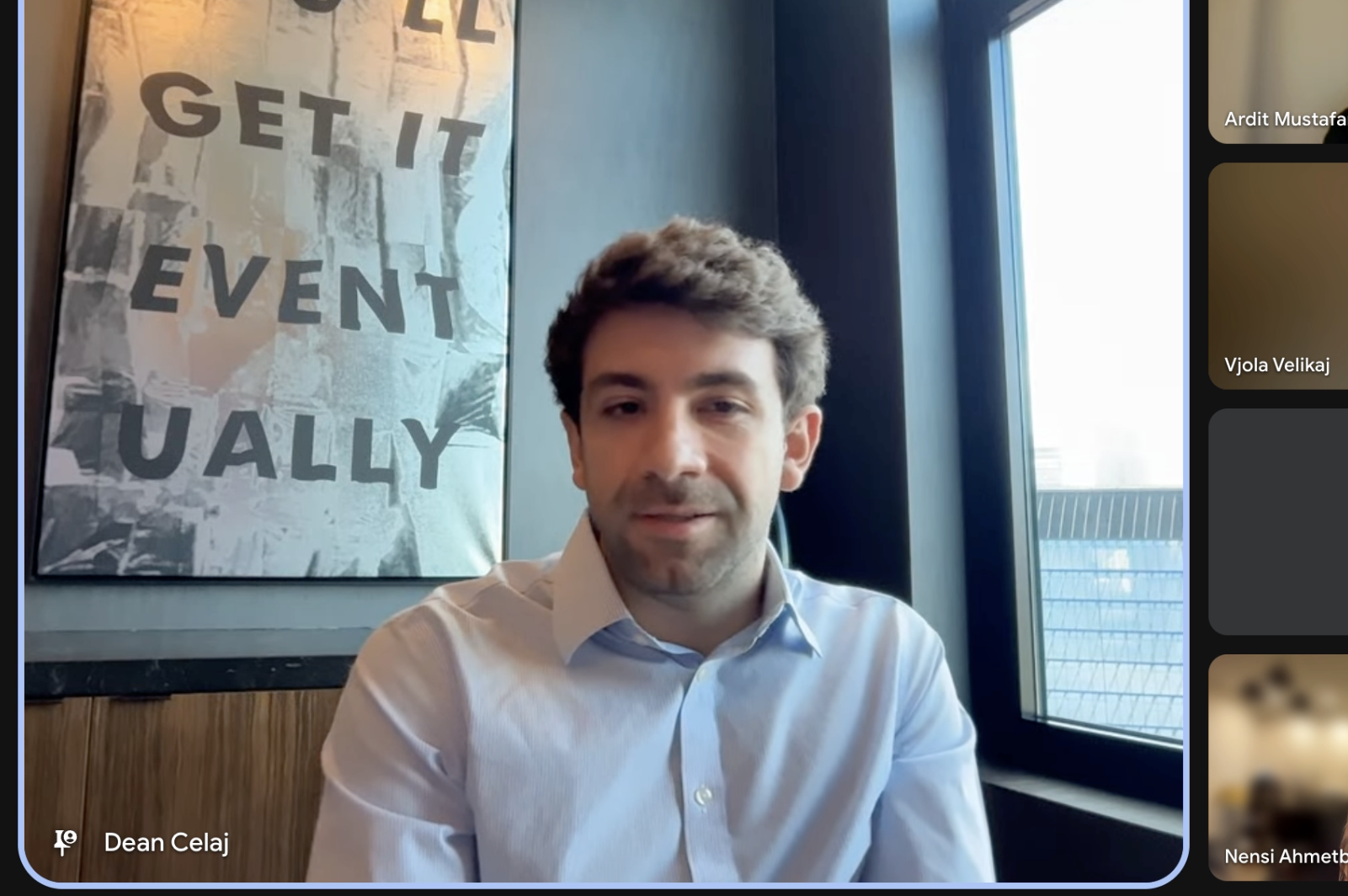
He went to the best schools in Tirana, spoke to the directors, found the best teachers for each grade level, and set up a schedule. Teachers came after school hours, were paid for their time, and recorded curriculum-aligned video lessons. Dean organized everything himself in an Excel sheet, matching the official Albanian curriculum to specific video topics.
The approach was practical: take the national curriculum, identify every topic point, and assign the best available teacher. No perfectionism, no overthinking. As Dean put it:
“If you try to get experts to do this from scratch, it’s impossible. They’re perfectionists. It was much easier to take the curriculum, and say: today’s video covers point 13-45, the next one covers 16-19.”
The result: Akademi.al produced 25,000 educational videos with a small team. When COVID hit and schools closed, Dean had content ready. He reached out to the Minister of Education (someone he’d never met), via Facebook and email, offering to make all videos available for free.
The offer that was too simple to refuse
Dean emphasized a key principle about early-stage business: when you have no track record, your offer must be so simple that it’s easy to say yes.
“Business is about the offer. When you have nothing, no track record, nothing; your offer needs to be incredibly simple for someone to say yes. My offer was: I’ll give you all these videos, ready to go. You just say yes.”
The Ministry agreed. Akademi.al became the official learning platform for 500,000 Albanian students during COVID. Notably, a competitor had also approached the Ministry with a paid platform, but Dean’s timing and zero-cost offer won out.
Trust: Albania vs. America
One of the most candid moments of the session was Dean’s comparison of business trust between Albania and the US. He argued that trust in Albania is slow, cautious, and built over long personal relationships. In America, it’s faster and more transactional.
“In America, I’ve never met half the people I’ve done deals with. We connected on LinkedIn, had a Zoom call, and signed a partnership. That’s unthinkable in Albania.”
He noted that Americans have a “trust by default” culture, which is fundamentally different from Albania’s approach. The minister who partnered with him during COVID had what he described as a “completely American mentality”, willing to trust quickly and act fast.
The decision: Albania or America?
After COVID, Dean faced a critical decision: try to monetize Akademi.al in Albania, or go to America and build a paid product for a larger market. He chose America.
“The effort was the same either way. America has much more competition, but it’s better to put that effort into a market where payment is normal, rather than trying to charge in Albania where the market is tiny.”
He tried briefly to add a Udemy-style paid model to Akademi.al but realized he didn’t understand business models well enough at that point. The Albanian government never paid for the platform, only startup grants came through. So he pivoted to building something entirely new in the US.
Go Teacher: What it does
Go Teacher is a Chrome extension that monitors student laptop activity in US school districts. In America, schools provide laptops to students, and those devices must be monitored. The platform:
- Tracks all URLs students visit and uses AI to categorize the activity
- Measures what percentage of screen time is educational vs. social media
- Scans Google Workspace connections to identify privacy and security risks
- Provides utilization analytics: of the $400 a district spends on platform X, how much is actually being used?
- Rates third-party app connections by risk level (identity access, file access, file modification)
The platform already has 30 billion rows of data. Dean’s vision is “return on learning”, correlating screen time data with academic outcomes to show which digital tools actually improve student learning.
Harvard, luck, and distribution
Dean was refreshingly honest about the role of luck. His first professor at Harvard turned out to be one of the most influential people in American public education; someone whose consulting firm works with Los Angeles, Boston, and New York school districts.
“I had my outcome clear before I arrived: I’m going to America, I’m going to find a partner, I’m going to launch a business. Many people more talented than me were less focused, they’d also apply to Google or Facebook. I only had one outcome.”
What impressed the professor wasn’t revenue or business model, it was that Dean had organized a small team to produce 25,000 videos. The operational achievement opened the door. The professor’s company had a network of school district relationships, and Dean’s credibility from Akademi.al (listed on UNESCO’s global COVID education response) gave him legitimacy.
KPIs and strategy for 2026
When asked about his key metric, Dean’s answer was clear:
“My biggest KPI is distribution. I’m not focused on ARR this year. I want to close partnerships with at least 3 US states. In Massachusetts alone there are 400 school districts. I want statewide distribution, that’s how we win.”
He also shared that showing up at conferences and being physically present has been critical for building the relationships that lead to statewide deals.
If Google came knocking?
When asked what he’d do if Google offered to acquire Go Teacher, Dean didn’t hesitate:
“I’d accept. Tomorrow I’d be working at their office. No question.”
But he added that he doesn’t expect that to happen, and if he were to build his next business, he’d approach things very differently based on everything he’s learned.
Ardit: Building OnAlbanian.app as a Solo Engineer
Background
Ardit is a software engineer based in Vienna, Austria. He came to Austria for his master’s degree, never finished it (a common story among programmers who land jobs, as he joked), and has been working at various companies since.
His side project, OnAlbanian.app, is a language-learning application for Albanian, essentially a combination of Duolingo and Anki (the flashcard app with spaced repetition). It’s fully bootstrapped, built and maintained by Ardit alone.
The origin: a personal problem
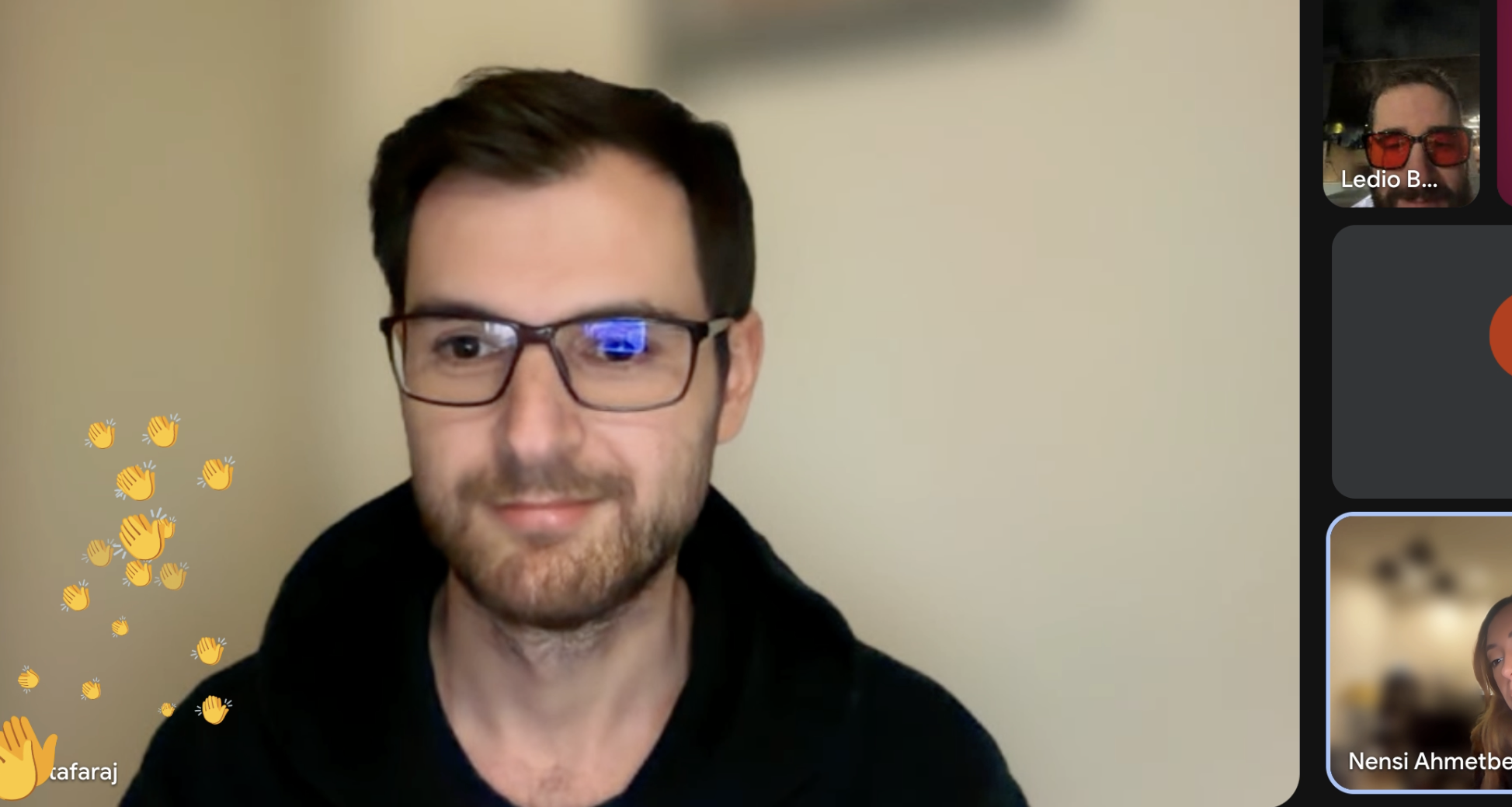
The idea started simply: Ardit’s Canadian girlfriend wanted to learn Albanian to speak with his family. There were no good resources; existing websites were filled with ads and poorly formatted. So during COVID, Ardit started building a flashcard app.
“I started with the idea that even if 10 or 50 people use it, I’d be happy. Last year alone, we hit 50,000 completed quizzes and flashcards. I still can’t believe people actually want to learn Albanian.”
The audience surprise
The app now has close to 10,000 users. The audience breakdown is revealing:
- Partners of Albanians (predominantly women), the largest group
- Diaspora Albanians who grew up abroad and want to reconnect with their roots
- Expats living in Albania who want to learn the language
The engineer’s blind spot: features over problems
Ardit was remarkably self-aware about the typical engineer’s mistake: building features you think are brilliant without validating them first.
“Every feature felt like ‘the killer feature’ that would bring users flooding in. But it wasn’t. Because I hadn’t tested it, hadn’t asked users, hadn’t done A/B testing.”
The feature that users actually love most, the A1 Learning Path (structured chapters with vocabulary progression), was one that users had been requesting repeatedly. Ardit initially resisted it because his original vision was for users to freely browse topics. When he finally built it, it became the most-used feature.
He also admitted to spending money on unnecessary third-party services to build technically impressive features that delivered little business value, a pattern he now recognizes and avoids.
Talk to your users (yes, really)
Ardit echoed what every investor and business coach says, but added the nuance of why engineers specifically struggle with this:
“I’ve heard ‘talk to users’ a thousand times. But programmers don’t do it enough. When I started actually watching how people use the app, understanding their motivations, why some want streak notifications and others feel guilty about them, it changed everything.”
The marathon metaphor
One of the most memorable moments of Ardit’s talk was an extended metaphor about running. He compared building a startup to training for a marathon, arguing that the key to longevity is enjoying every single run, not measuring each one against the marathon goal.
“If every run is a good run, you just put on your shoes and go, you get positive reinforcement every time. Over the years, the marathon comes naturally. But if you set the marathon as your daily benchmark, you’ll burn out fast, because you never ran a marathon today.”
His point: in a solo bootstrapped project, sustaining motivation is the hardest challenge. If you only measure yourself against the ultimate goal, you’ll quit. But if the daily work itself is enjoyable, you stay in the game long enough for compounding to work.
Growth and business model
OnAlbanian runs on a freemium model: most content is free, with a premium subscription at €10/month or €95/year. Growth is entirely organic:
- App Store search (ranks #1 or #2 for “learn Albanian” in US and UK)
- Word of mouth and referrals (a significant portion of new users)
- Google search
- ChatGPT recommendations (a new and growing channel)
No money has been spent on marketing. Ardit deliberately chose not to run ads, keeping the app ad-free, a decision users consistently praise in reviews.
On Duolingo as competition
When asked about Duolingo potentially adding Albanian, Ardit was candid:
“I don’t want Duolingo to be a rival in this space. But Albanian is a very small market for them. My advantage is that I’m Albanian myself, the experience I provide is native and authentic, with cultural aspects that no generic platform can replicate.”
LinkedIn as a builder’s tool
Ardit’s final practical insight: LinkedIn has been invaluable for making connections. He noted that most people are genuinely willing to help, and he wished he’d started reaching out earlier instead of assuming people wouldn’t want to talk to him.
“I had this complex that people wouldn’t want to help me, or that I wasn’t ‘big enough’ for them. Absolutely not true. Most people are happy to talk, and they don’t judge where you are right now.”
Key Takeaways
- Make your offer impossibly simple. Dean’s partnership with the Albanian government worked because the offer required zero effort from the other side. When you have no track record, reduce friction to near zero.
- Trust cultures vary, so adapt accordingly. In America, deals happen fast over LinkedIn. In Albania, trust is slow and personal. Knowing the difference shapes your entire go-to-market strategy.
- Start with the problem, not the feature. Both founders learned this the hard way. Ardit built features he thought were brilliant; users wanted something different. Dean built content first and figured out the business model later.
- Talk to your users, (especially if you’re an engineer) ! Programmers default to building. The most valuable thing you can do is watch how people actually use your product and understand their motivations.
- Distribution beats product in small markets. Dean’s entire 2026 strategy is about statewide distribution, not ARR. In the Albanian market, Ardit’s organic App Store ranking is his distribution moat.
- Enjoy the daily run, not just the marathon. Ardit’s marathon metaphor resonated across the group. Burnout kills more startups than competition. Find intrinsic motivation in the process itself.
- Mistakes compound into expertise. Both founders emphasized that early mistakes don’t feel valuable in the moment, but they become your biggest advantage when you build the next thing.
- Luck is real, but preparation attracts it. Dean’s UNESCO listing, his Harvard professor connection, the COVID timing, all luck. But none of it would have mattered without 25,000 videos already recorded.
- The Albanian market needs venture mindset, not just business mindset. Albania has good business opportunities, but few models of venture-scale success. Founders often don’t calculate growth trajectories or think about 10x scaling.
- Ask for help. People will surprise you. Both Ardit (via LinkedIn) and Dean (via cold outreach to ministers and professors) found that people are far more willing to help than you expect.
About Albanians in IT (AIT)
Albanians in IT is a global network of senior Albanian professionals in software engineering, product development, cybersecurity, data, AI, and technical leadership. We connect diaspora experts, founders, and decision-makers to share knowledge, support each other, and build meaningful cross-border collaborations.
Membership is exclusive to professionals with 5+ years of experience who are committed to contributing to the Albanian tech ecosystem.
Learn more: albaniansinit.com
 Albanians In IT
Leave a comment