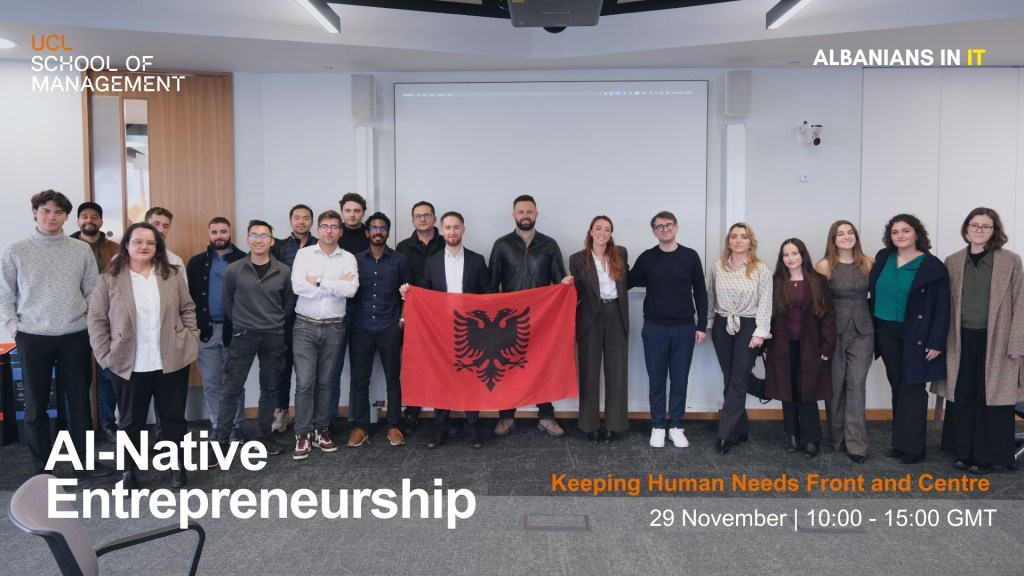
Topic: “AI-native entrepreneurship: Keeping human needs front and centre.”
📍 29 November | UCL School of Management, Canary Wharf
What happens when AI agents become autonomous colleagues rather than simple assistants? How will tiny teams of 2-6 people build companies that once required hundreds? And most importantly, what remains uniquely human in an AI-accelerated world?
These questions took center stage at the Albanians in IT (AIT) forum on AI-Native Entrepreneurship, held at UCL School of Management. The event brought together diaspora technologists, founders, and industry leaders to explore one of the most significant shifts since the internet: the rise of autonomous AI agents and their impact on how we build and scale organizations.
From AI Assistants to Autonomous Agents: A Fundamental Shift
The forum opened with Besart Shyti (Machine Learning Institute, ex-Meta) challenging conventional thinking about AI agents.
“A good agent is more than a chatbot,” Shyti explained. “It acts with autonomy, completing tasks without constant human supervision. Even a simple system that can transcribe, search, and summarize content end-to-end qualifies as an agent.”
This shift is already creating AI-native startups that reach $100M in annual revenue in under a year by delegating work to machines at unprecedented scale.

Aurora Kapo (AI Strategy Manager, HSBC UK) brought real-world perspective from banking, where AI agents are transforming everything from fraud detection to multi-step operational workflows. Yet she stressed a crucial challenge: trust.
“Institutions managing public money can’t afford silent failures,” Kapo noted, recalling costly incidents from airline booking errors to financial misinterpretations. “Even if full autonomy arrives tomorrow, are we ready – technically, culturally, and operationally – to handle it responsibly?”
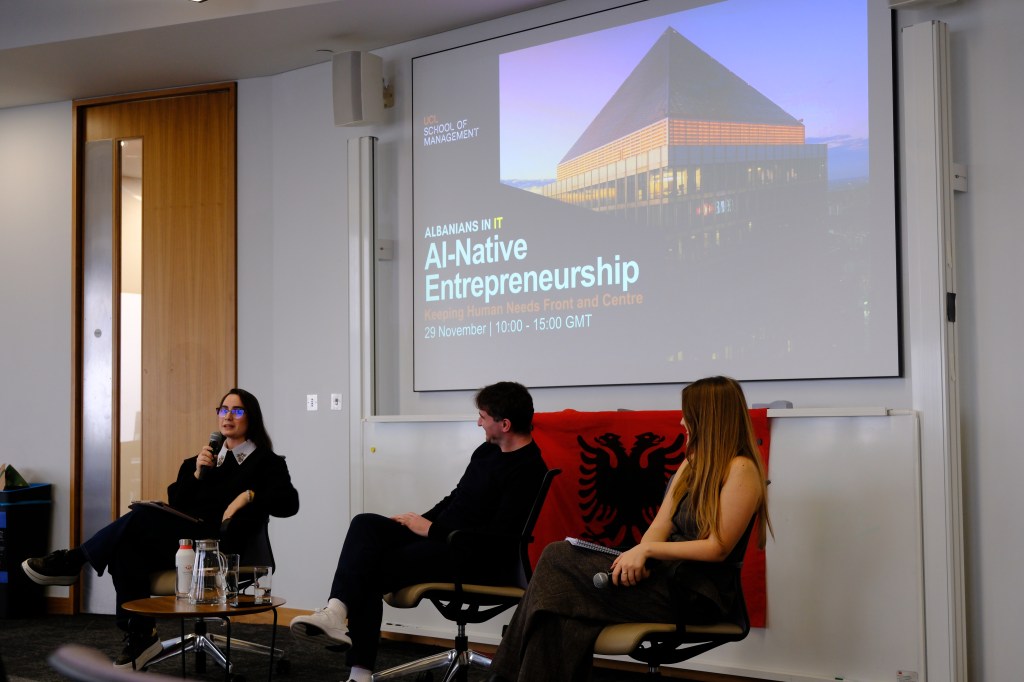
The Rise of Tiny Teams and the New Growth Mindset
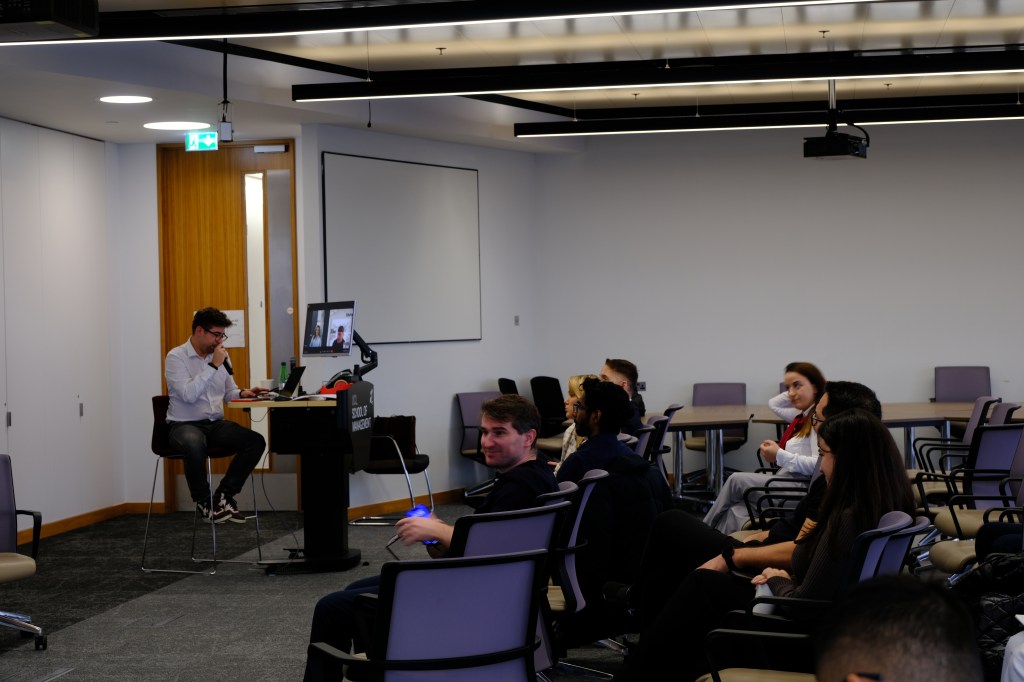
The second panel explored a striking reality of 2025: scale no longer correlates with headcount.
For decades we said, “If you want to go fast, go alone; if you want to go far, go together.”
But today, the updated playbook is:
“If you want to go fast and far: you travel light, with an army of agents at your command.”
The panel grounded this in the now-famous HBR Experiment, where treating AI as a “co-founder” led to Gap-Based Hiring, bringing in humans only to fill strategic voids the AI can’t cover. The consequence?
The traditional junior role is disappearing, as AI absorbs the grunt work that once trained early-career talent.
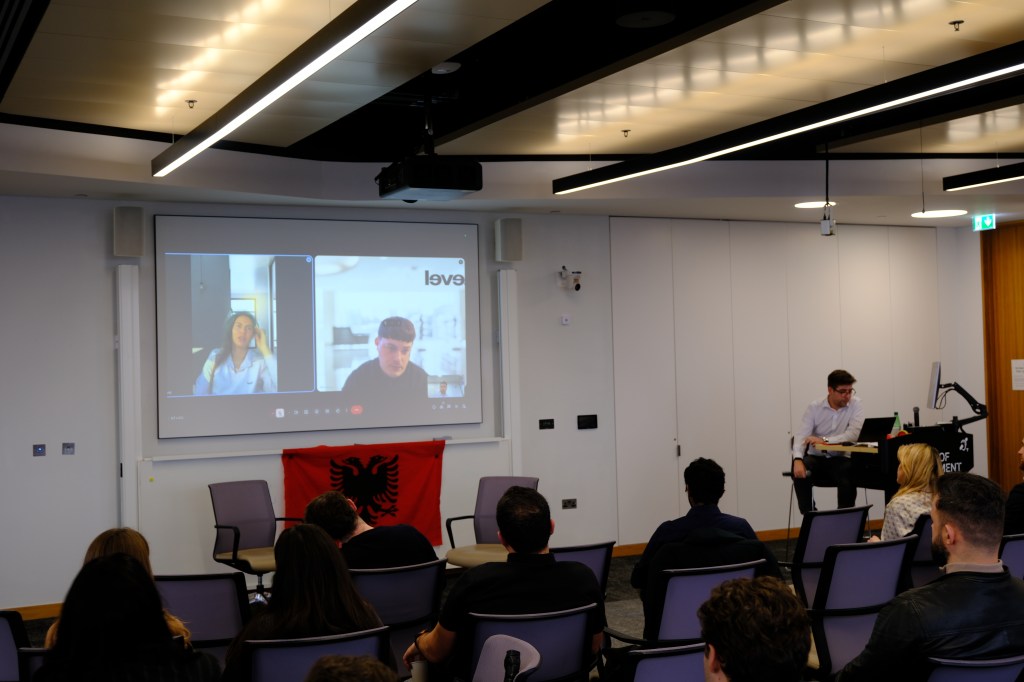
To make sense of this shift, the panel featured two leaders building these systems in practice:
Elkida Bazaj (Genpact) and Mario Husha (Level Financial Technology).
1. Architecture Over Headcount
“Tiny teams” aren’t small because of constraints — they’re small by design.
Elkida explained how modern systems rely on a Master Agent: a high-level orchestrator that interprets user intent and triggers sub-agents. With the right architecture, a team of 2–6 people can deliver what once required entire departments.
2. Governance Is the New Growth Constraint
Mario emphasized the limits of speed in regulated industries.
As companies adopt agentic workflows, they also need internal AI Councils focused on privacy, data integrity, and responsible automation.
The “human in the loop” becomes less of a doer and more of an auditor ensuring the system is trustworthy.
3. Domain Expertise Wins
Both speakers stressed that tools amplify output, but only domain insight ensures correctness.
In an automated world, teams that deeply understand their customers, and can design systems around real needs, gain the competitive edge.
In Short
Tiny teams are faster and more capable than ever, but they’re not simpler.
They require professionals who can orchestrate systems, audit agents, and apply judgment, rather than write every line of code themselves. Upskilling becomes essential to remaining competitive.
Human-Centred AI: Can Wellbeing and Creativity Co-Live with Global Connectivity and Automation?
Keynote by Dr. Alastair Moore (Founder & CEO, DeepFlow; ex-UCL researcher & entrepreneur)
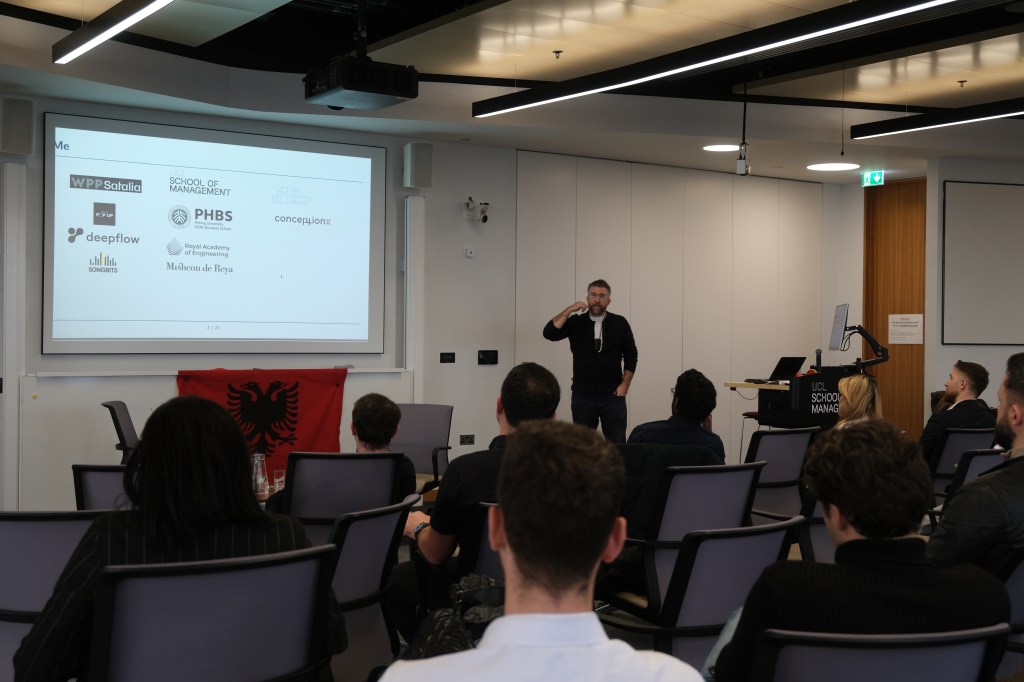
The forum’s closing keynote by Dr. Alastair Moore shifted the conversation from tactical to transformational, exploring how AI reshapes, beyond companies, entire economies and societies.
When Machines Set the Pace
Moore opened with a striking observation: “Work is no longer paced by humans,it’s paced by machines.”
As automation accelerates:
- Tasks execute continuously, 24/7
- Organizations shift from meeting-driven structures to machine-managed operations
- Humans transition from doing work to designing systems that work
“It’s crazy how I wouldn’t believe this would happen within 2030. I knew it would happen, but not so soon. It fundamentally changes what it means to be productive.”
The Hidden Crisis: Finding Meaning in Machine-Speed Work
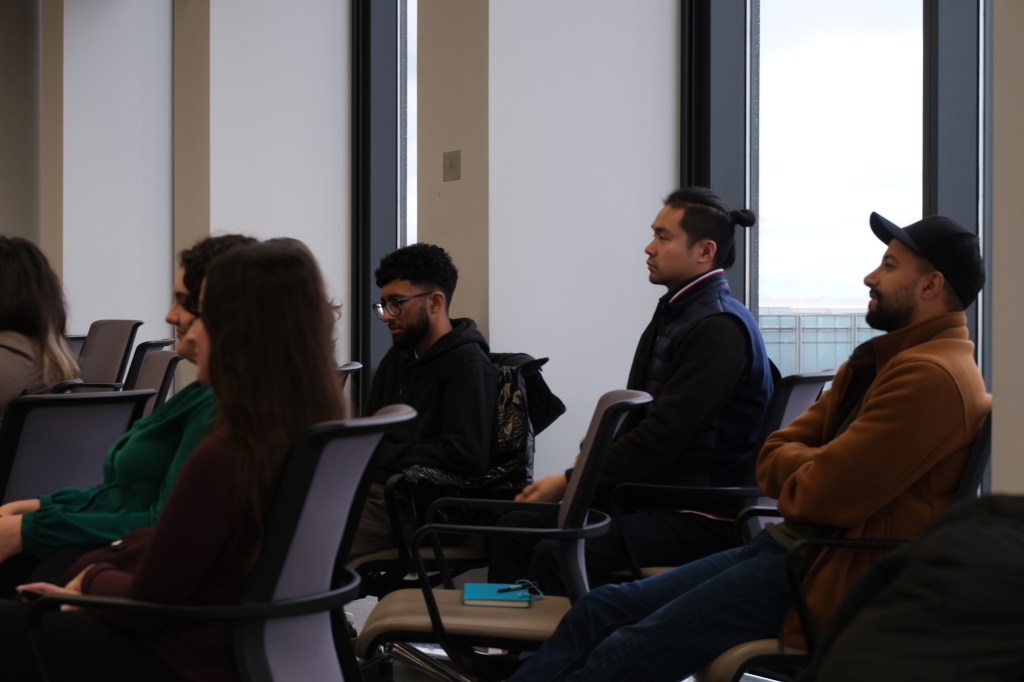
Moore warned of an emerging “post-task identity crisis.” As AI handles more visible work, professionals struggle with a fundamental question: Where does my value lie?
“When machines do the tasks, people risk feeling less needed,” Moore explained. “Their contributions become invisible, and pride in work diminishes.”
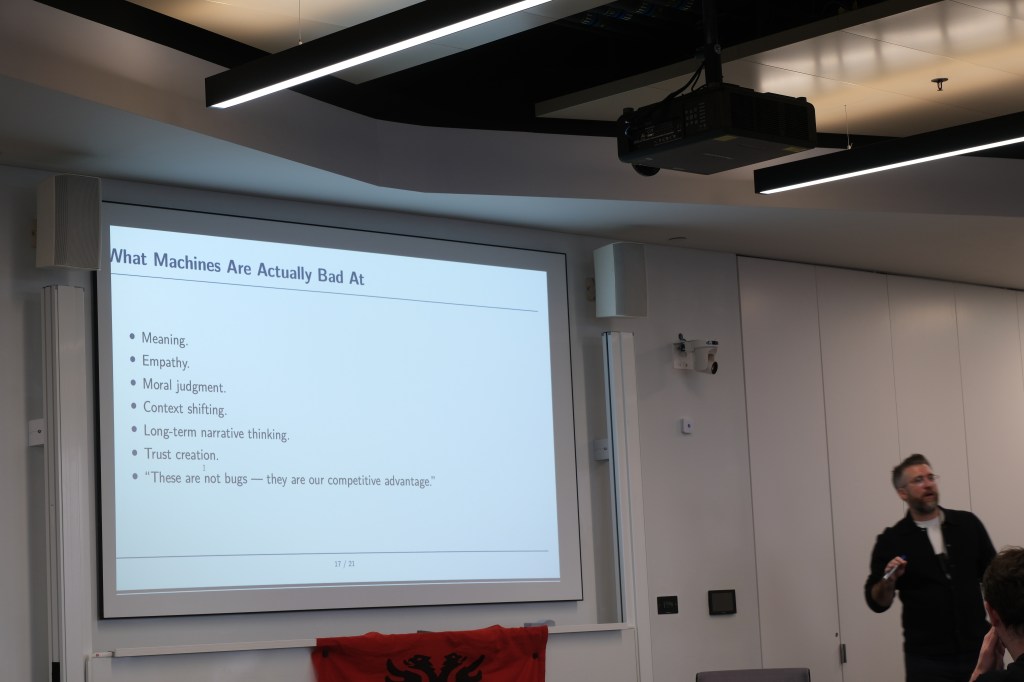
The solution isn’t to resist automation but to embrace uniquely human capabilities:
- Sense-making – Understanding context and nuance
- Ethical judgment – Making moral decisions machines cannot
- Trust creation – Building human connections
- Narrative building – Creating meaning from data
- Long-term vision – Seeing beyond immediate optimization
“These aren’t flaws in human design,” Moore emphasized. “They’re our competitive advantage.”
The Economic Reality No One Wants to Discuss
Moore then addressed uncomfortable truths about automation’s impact on society:
Labor isn’t just about productivity – it’s about power. When automation replaces workers at scale, political and economic leverage shifts dramatically toward those who own the technology.
Demographics are forcing this change. With aging populations and stagnant productivity across major economies, automation isn’t optional – it’s necessary for economic survival.
The pace of change exceeds our ability to adapt. Moore borrowed from evolutionary biology’s “Red Queen” effect: “In a world accelerating around you, standing still means falling behind.”
A Scientific Revolution in the Making
Perhaps most provocatively, Moore predicted that by the 2030s, meaningful scientific discovery will require massive computational infrastructure. Countries without it simply won’t participate in cutting-edge research.
“Scientific disciplines will industrialize,” he warned. “Small labs – and even many countries – will be excluded without significant investment.”
What Small Countries Can Do
When asked how smaller nations like Albania can compete, Moore was pragmatic:
- Move fast – Act before infrastructure gaps become unbridgeable
- Pick your battles – Choose strategic niches rather than competing everywhere
- Leverage agility – Use the freedom from legacy systems as an advantage
- Build smart – Create lean, interoperable infrastructure without the bloat
“Your size is only a disadvantage if you try to play by big country rules,” Moore noted. “Agility and focus beat scale in rapidly changing environments.”
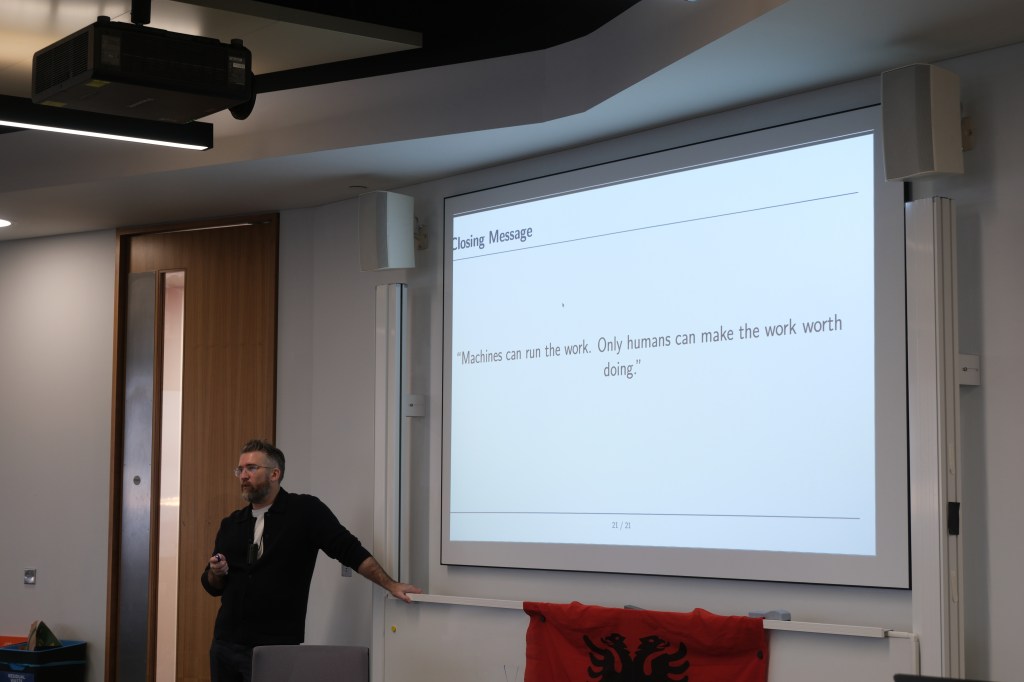
The Core Message: Acceleration Without Panic
Moore’s keynote was designed to prepare, without following the typical “humans are unique” narrative. He painted a picture of inevitable acceleration:
- Work moving at machine speed
- Scientific research requiring industrial-scale computing
- Economic power concentrating around AI capabilities
- Nations either adapting or becoming irrelevant
Yet his final message remained profoundly human:
“Machines can do the work. Only humans can make the work worth doing. In an AI-accelerated world, being human is the entire point.”
For the entrepreneurs and technologists in the room, the implications were clear: success in the AI era requires both embracing technological acceleration and doubling down on human judgment, creativity, and purpose.
Spotlight on Albanian Innovation: Tika Studios
The forum concluded with an exciting showcase of homegrown innovation. Tika Studios, an Albanian game development studio, premiered their latest game teaser, Fatebound, to the audience, demonstrating exactly the kind of creative, technology-driven entrepreneurship the forum celebrated.
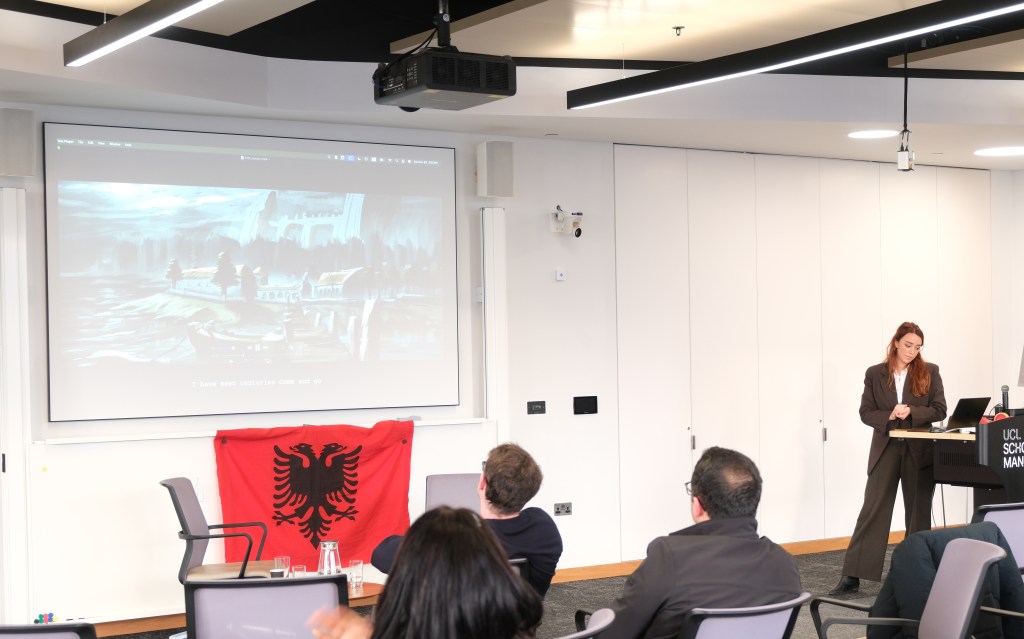
The preview highlighted how Albanian creators are already leveraging cutting-edge technology to compete on the global stage – proving that with the right combination of talent, vision, and strategic use of advanced tools (like Unreal Engine 5), teams from emerging markets can build world-class digital products.
Check out the teaser here: http://fateboundgame.com/
Key Takeaways for Builders and Leaders
The forum crystallized several essential insights for anyone building in the AI era:
- Start small, think systematically – Tiny teams with clear system design can outperform large organizations
- Trust is infrastructure – Responsible AI isn’t optional; it’s foundational
- Domain expertise matters more, not less – AI amplifies knowledge but can’t replace understanding
- Prepare for the “Agent Boss” role – Future professionals will manage AI systems, not tasks
- Stay human-centered – Technology should expand human capability, not replace human purpose
Looking Ahead
As one attendee noted, “This was truly a realistic look at how we build differently.”
For entrepreneurs and technologists, the message is clear: AI-native building is about expanding what small, focused, mission-driven teams can accomplish. And in that expansion lies both the challenge and the opportunity of our time.
The Albanians in IT Forum on AI-Native Entrepreneurship was held on November 29, 2025, at UCL School of Management in London. For more information about future events and the AIT community, become a member:https://albaniansinit.com/how-to-join/
 Albanians In IT